
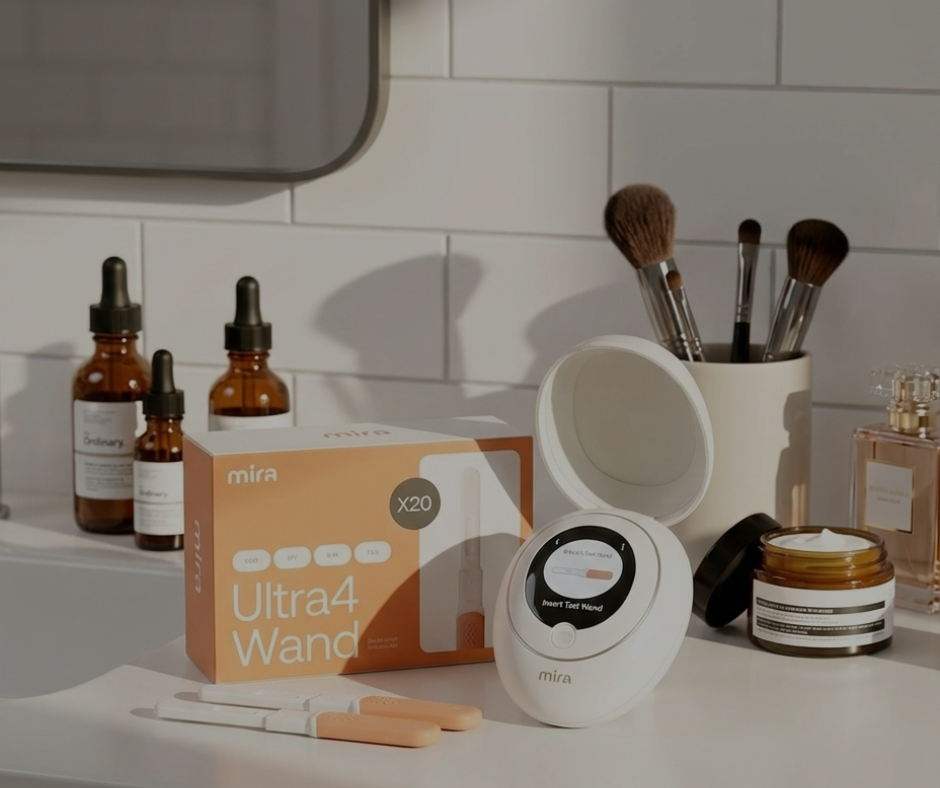
Mira ❤️’d this story so much, they agreed to sponsor this article.
We’re Starting in January, But I Wanted to Understand My Cycle Before We Started Trying
The conversation was shorter than I expected. “So… next year?” “Next year.” No announcement, no toast.
Mira’s Black Friday Sale is On: 33% Off Kits + Wands!
Just the two of us agreeing that 2027 is the year we start trying for a baby. We’ll start in January, after the holidays.
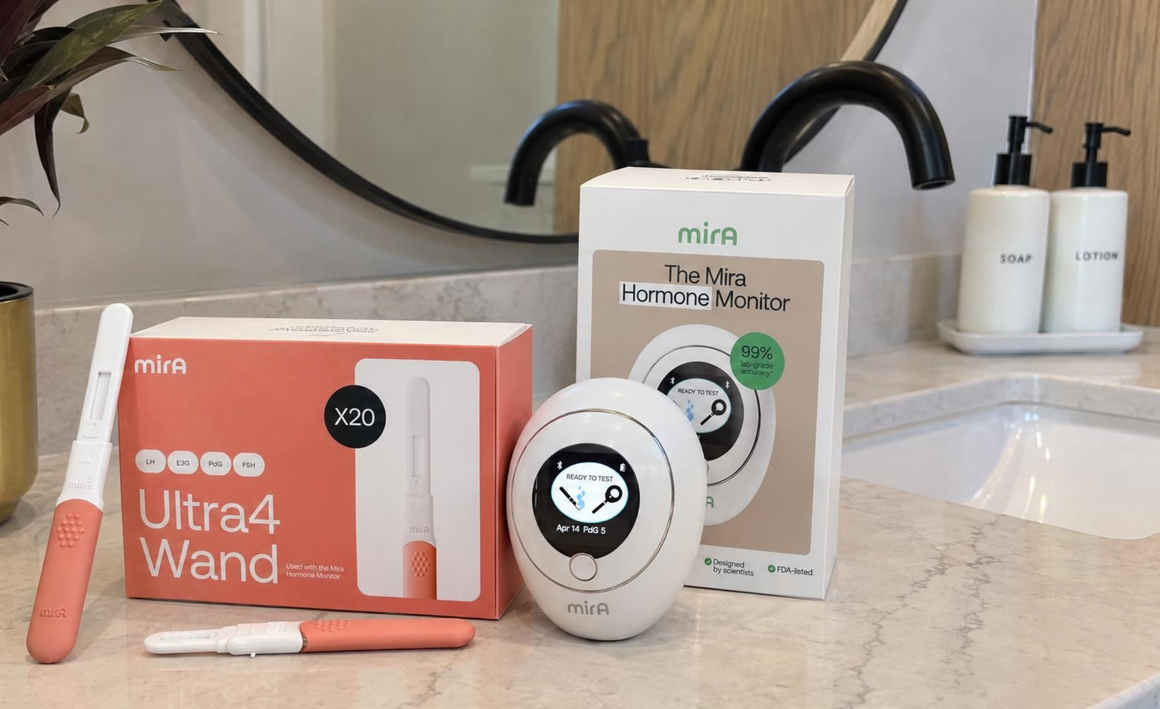
I went straight from “this is exciting” to “okay, but what’s the plan?” And any plan comes down to timing: there are only a few days each cycle when trying can work. I started reading reviews from women tracking their cycles, and one stopped me:
“Completed my first full cycle and am hooked. I was so off with when I thought was my ovulation. The Mira trackers accuracy has me hopeful in my fertility journey.”
Michelle S., verified buyer
That’s when it hit me: I had no idea when I actually ovulate. My app had a guess. That’s not the same thing.
The Resolution Nobody Puts on Instagram
Everyone posts their resolutions. Nobody posts “start trying to conceive.” That one lives in your notes app, and in your head at 1 a.m.
The few people we did tell all had the same three lines:
- “Just relax. It’ll happen.”
- “Don’t overthink it.”
- “Wait, you’re planning it?”
Yes. I’m planning it. I plan vacations. I plan Tuesday dinners. I was never going to be chill about this one.
I also did the end-of-year math: how old I’ll be, how long “give it a while” actually is. And what happens if “a while” turns into all of 2027.
That’s the part that got me. Not the trying. The idea of spending a whole year guessing.
I Don’t Want January to Be Month One of Guessing
My period app said I ovulate around day 14. Very confident. That was basically all I knew.
Turns out day 14 is more myth than rule. In Mira’s own data, only 17% of cycles ovulated on day 14.²
But apps are predictions based on averages, and my cycles aren’t identical. Some run short. Some run long.
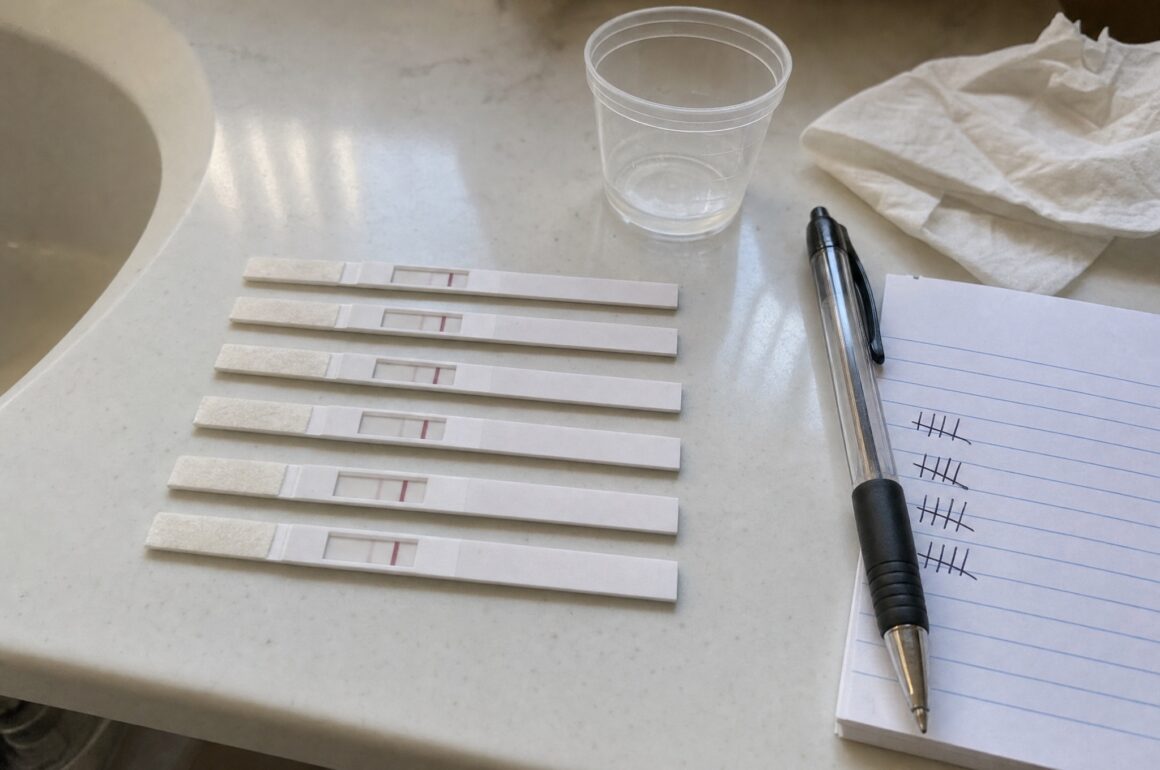
Ovulation strips can help, but you still have to stare at a line and decide if it’s “dark enough.” And even a dark line only tells you about your LH surge. It can’t tell you whether you actually ovulated. That’s what a progesterone rise afterward helps confirm.
If I wait until January to start paying attention, January will just be month one of figuring out my body. Probably month two, too.
So I typed it into my notes app like an actual resolution: I’m not going to spend 2027 guessing. That’s what sent me to Mira’s Ultra4 Kit, a couple of cycles before we start.
Why I Picked Mira After Talking Myself Out of It Twice
I didn’t buy it right away. The Mira Ultra4 Kit is an investment, not a cheap box of drugstore strips, and we’re not even trying yet.
What changed my mind was the difference between a line and a number. Mira gives you actual hormone levels instead of a yes/no line to squint at, and it tracks four hormones from one test.
I read up on how Mira works first, because of course I did. Mira has been chosen by 5,000+ healthcare professionals, and more than 350,000 women trust it. In a retrospective analysis of Mira users, 84% of those who reported a pregnancy did so within their first six cycles of using Mira.³
What Mira Actually Is, in Normal-Person Terms
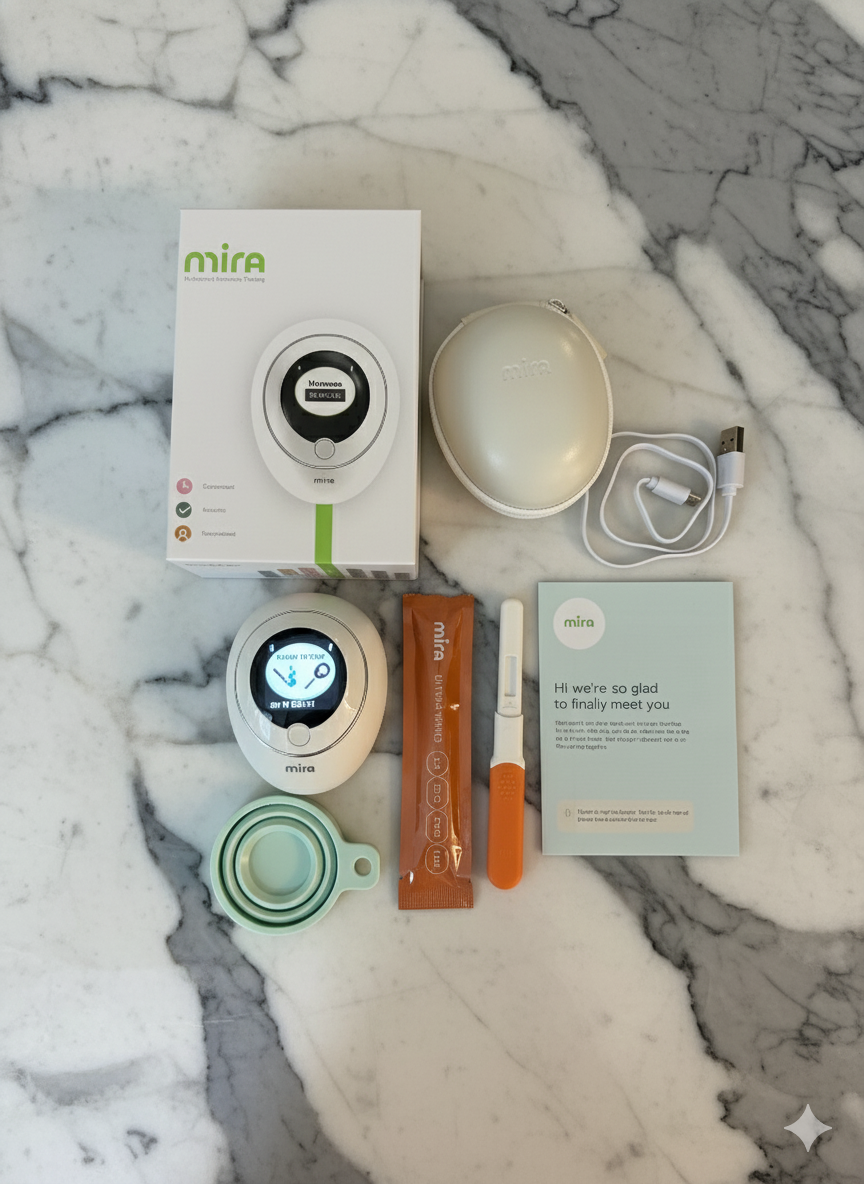
The kit is three things:
- A small monitor (the little analyzer)
- Ultra4 test wands
- The free Mira app, where your results show up
You test a urine sample at home, slide the wand into the monitor, and the numbers land in the app. No blood draw. No appointment. No waiting on a call from a nurse.
What sold me was the proof. Mira is the first multi-hormone monitor in 25 years to be validated against ultrasound in a blinded clinical study, the gold standard doctors use to confirm ovulation.¹
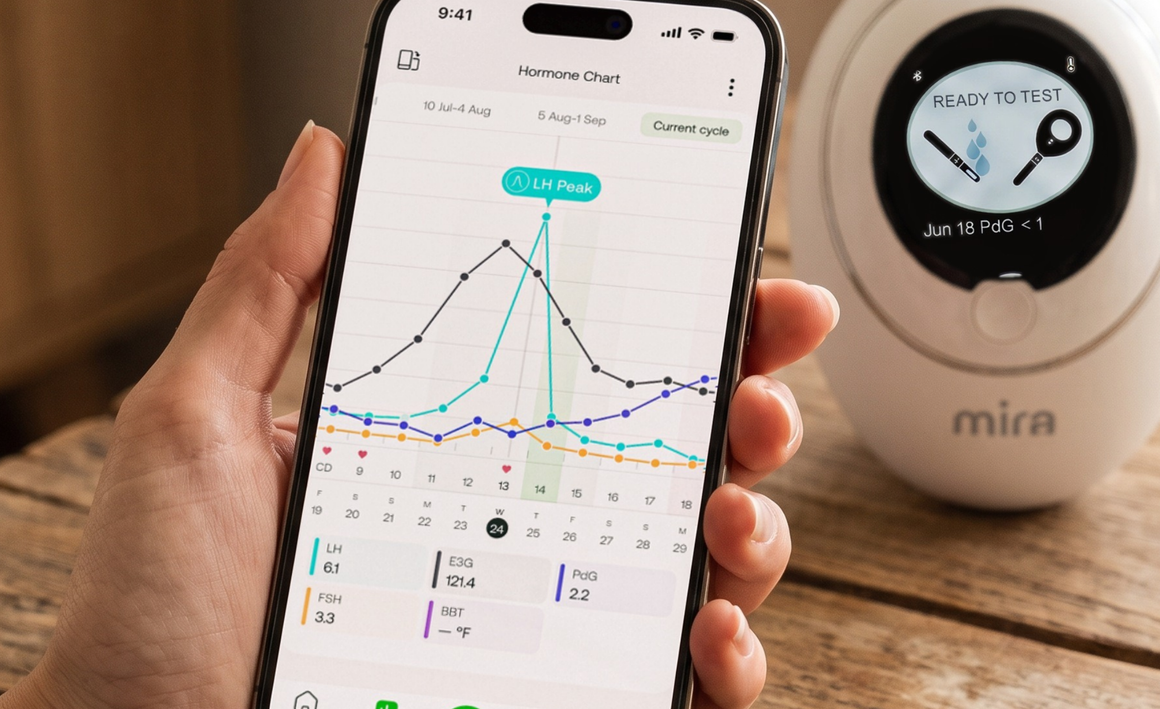
My Four-Hormone Cheat Sheet for Planning a Pregnancy
I didn’t want to become a scientist. I just wanted to know what each number meant for the plan:
- E3G (estrogen): rises as your fertile window opens
- LH: the surge that typically comes right before ovulation
- PdG: a progesterone marker that rises after ovulation, so it helps confirm ovulation actually happened. Low levels may signal a skipped ovulation
- FSH: extra context early in the cycle, indicating follicle growth
The app explains what you’re looking at and what it means for your cycle, so I didn’t have to memorize any of it.
My Whole Routine: Pee, Dip, Slide, Wait, Check
- Pee in a cup (truly glamorous)
- Dip the wand
- Slide it into the monitor
- Wait about 16 minutes
- Check the app
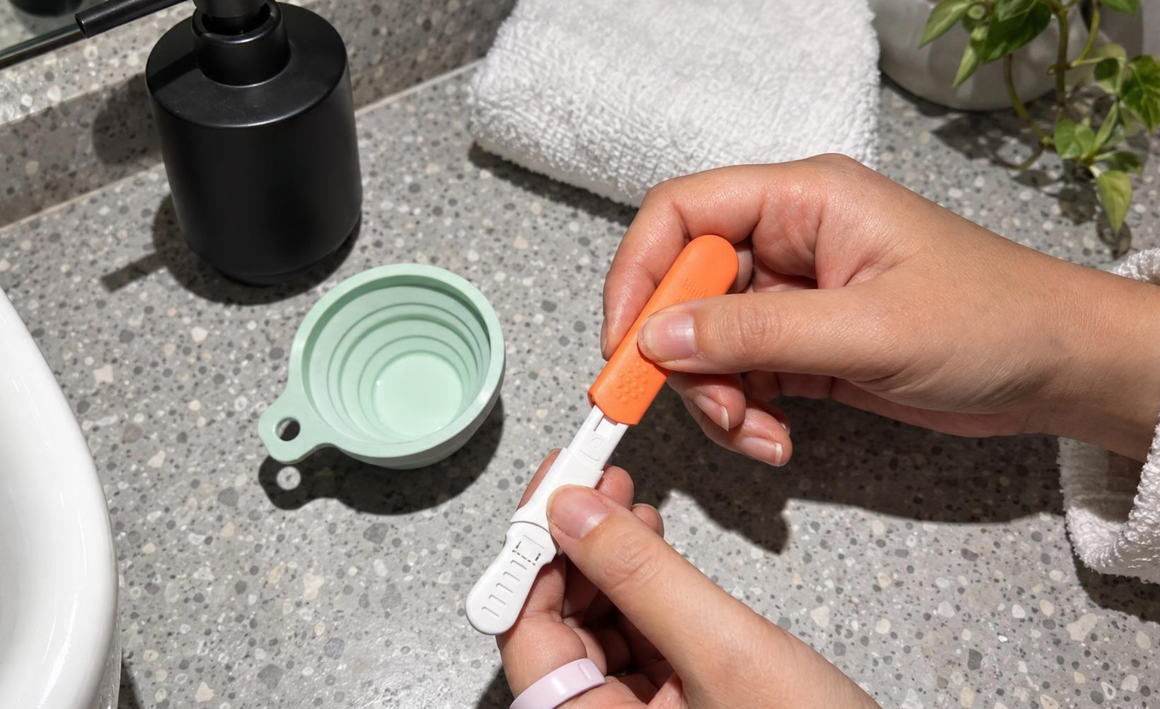
And no, I’m not testing every single day. The app tells you which days to test, so some weeks I barely test at all. It hasn’t felt like a second job.
Cycle Two Showed Me Something My App Never Did
Cycle one was me learning the routine. Cycle two is when it clicked. My app still said day 14. My hormones did not agree.
My estrogen marker climbed, then my LH surge showed up days later than the app predicted. After that, my PdG rose, which helps confirm ovulation actually happened.
I ovulate later than I thought. If we’d gone by the app, we would be timing everything “perfectly” in January… on the wrong days. Maybe for months.
That hit me harder than I expected. Mostly relief: better to find out now than after a few rounds of negative tests.
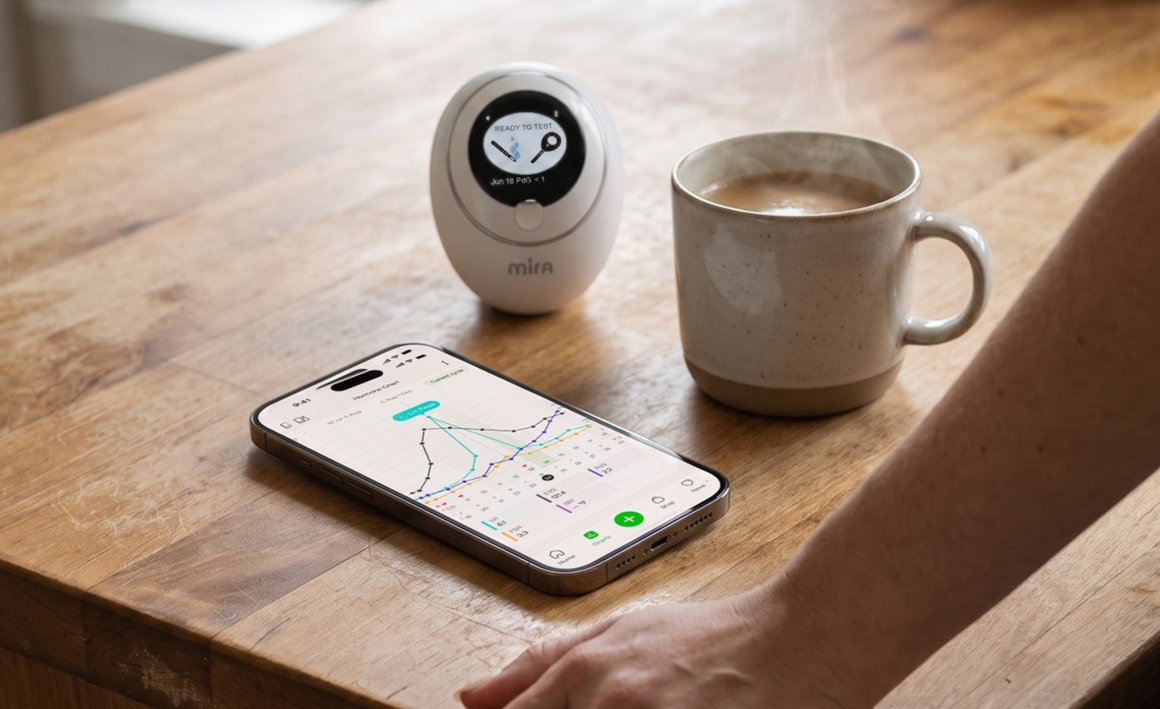
The Four Thoughts That Almost Talked Me Out of Starting Early
“Isn’t this jumping the gun if we’re not trying yet?”
Honestly, this is the whole point. Learning my pattern takes a few cycles, and I’d rather spend them now. (Mira isn’t birth control, and it’s not how we’re waiting. That part of the plan is handled.)
“What’s the point if my cycle changes every month?”
That’s exactly why prediction apps struggle with me. Mira reads what my hormones are doing that cycle, not what an average says I “should” be doing.
“Will I know I actually ovulated, not just that I surged?”
A surge is one piece. Ultra4 includes PdG, which helps confirm ovulation after the fact. Seeing that rise gives me more peace of mind than a strip ever could.
“What if more data just makes me more anxious?”
I worried about this one. The opposite happened. Numbers calmed me down. It wasn’t “is this line positive?” It was “here’s what’s happening.”
The Honest Downsides I’d Tell a Friend About
If I were texting a friend who’s planning for next year, I’d say:
- It’s not cheap. The Ultra4 Kit is $249 with 20 wands, or $269 with 30, and FSA and HSA are accepted. (If you’re reading this during Mira’s Early BFCM Sale, it’s marked down, which is part of why I didn’t wait.)
- You still have to test. If you want zero effort, this isn’t it.
- Nothing guarantees pregnancy. Timing is one piece of a complicated picture.
“Good product. Easy to use and has really helped my wife and I understand her cycle better. We were actually several days off her ovulation by only using urine LH strips. It is a bit pricy but it’s worth it if you’re feeling lost with fertility planning!”
Mackenzie C., verified buyer
But for me, it’s the first thing that made our plan feel like an actual plan.
So, Am I Pregnant Yet?
Not yet, and that was never the point. We haven’t started trying. That starts in January. And I’m not going to tell you a hormone monitor is a magic trick.
What I can say is that I know my pattern now. I ovulate later than my app thought, and I know what it looks like when my PdG confirms it.
I’ve booked a checkup for early next year, and I’m bringing the report from the app so that conversation starts with data instead of “I think?”
Whatever 2027 brings, it won’t start with guessing.
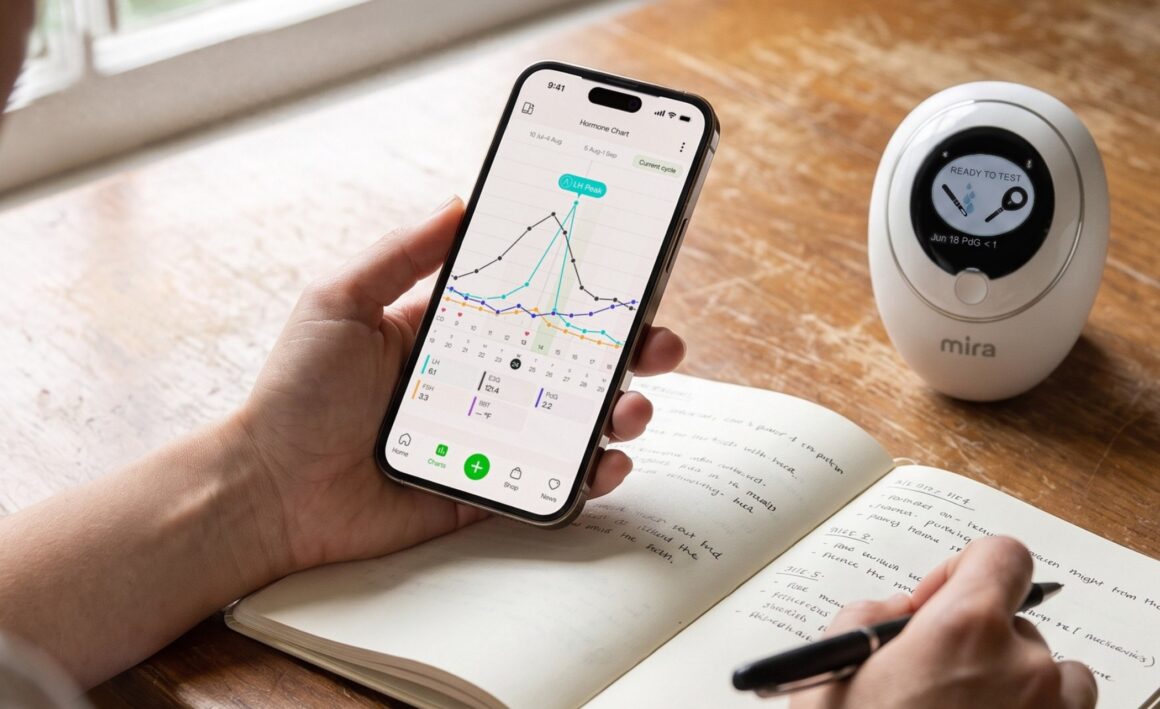
Who I’d Tell to Start Before January
I’d look into Mira Ultra4 if:
- You’ve decided next year is your year, and you want a head start
- Your cycle isn’t the same length every month
- You have PCOS and want to see what your hormones are actually doing
- You’ve been trying for a while and want clearer data on your cycle instead of more waiting
- You’ve tried ovulation strips and still feel unsure
- You want to know ovulation happened, not just predict it
- You want real numbers to bring to your doctor
Want help choosing a setup? Take Mira’s quiz. Want the science first? This breakdown helped me a lot.
My 2027 Plan, Minus the Guessing
Planning a pregnancy can make you feel weirdly powerless. You can control the calendar. You can’t control the outcome. Mira doesn’t change that, and it doesn’t promise to.
What it’s given me is the one thing I can get ahead of: a clear picture of what my body is doing, before month one. When you’re about to spend a year on something this big, that head start is worth a lot.
Mira’s Black Friday Sale is On: 33% Off Kits + Wands!
As always: this is my personal experience, not medical advice. If you’re planning a pregnancy, dealing with infertility or loss, or have medical concerns, please talk with a qualified clinician.
Disclaimer: Mira is for hormone tracking and personal awareness only. It is not intended to monitor or evaluate the effectiveness of fertility treatment or any medical treatment. Mira does not guarantee pregnancy, and only a healthcare provider can diagnose fertility concerns or any condition. Do not use Mira for contraception. Hormonal medications, including hormonal birth control, may impact results. Mira does not diagnose, treat, cure, or prevent any disease. Consult a doctor for all medical decisions.
¹ Based on a blinded clinical study of 121 ovulatory cycles with 890 ultrasound scans (Bouchard et al., 2026). Findings should not be used for clinical decision-making. Study: rbmojournal.com
² Based on a retrospective analysis of 4,452 cycles, 742 Mira users aged 25–45 with regular cycles, no reported health conditions. Ovulation estimated via LH and PdG.
³ Based on a retrospective analysis of Mira users who reported pregnancy outcomes within the Mira app. Results are observational, self-reported, and not from a randomized controlled trial. No control group was included. Individual outcomes may vary.